
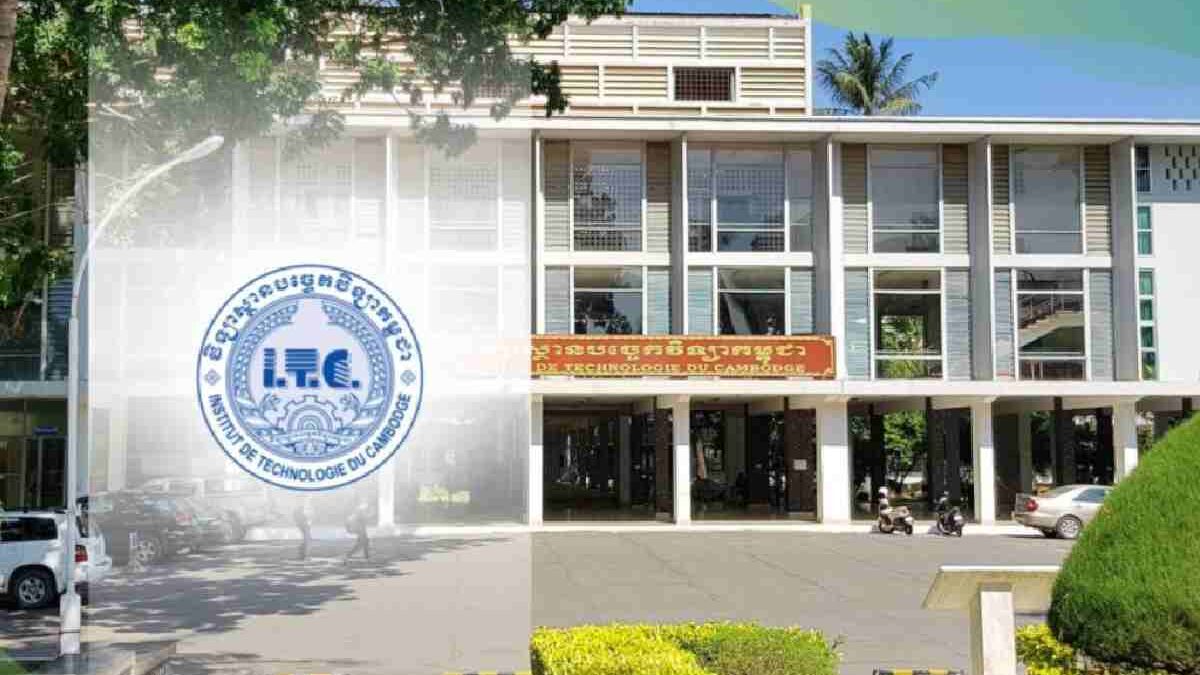
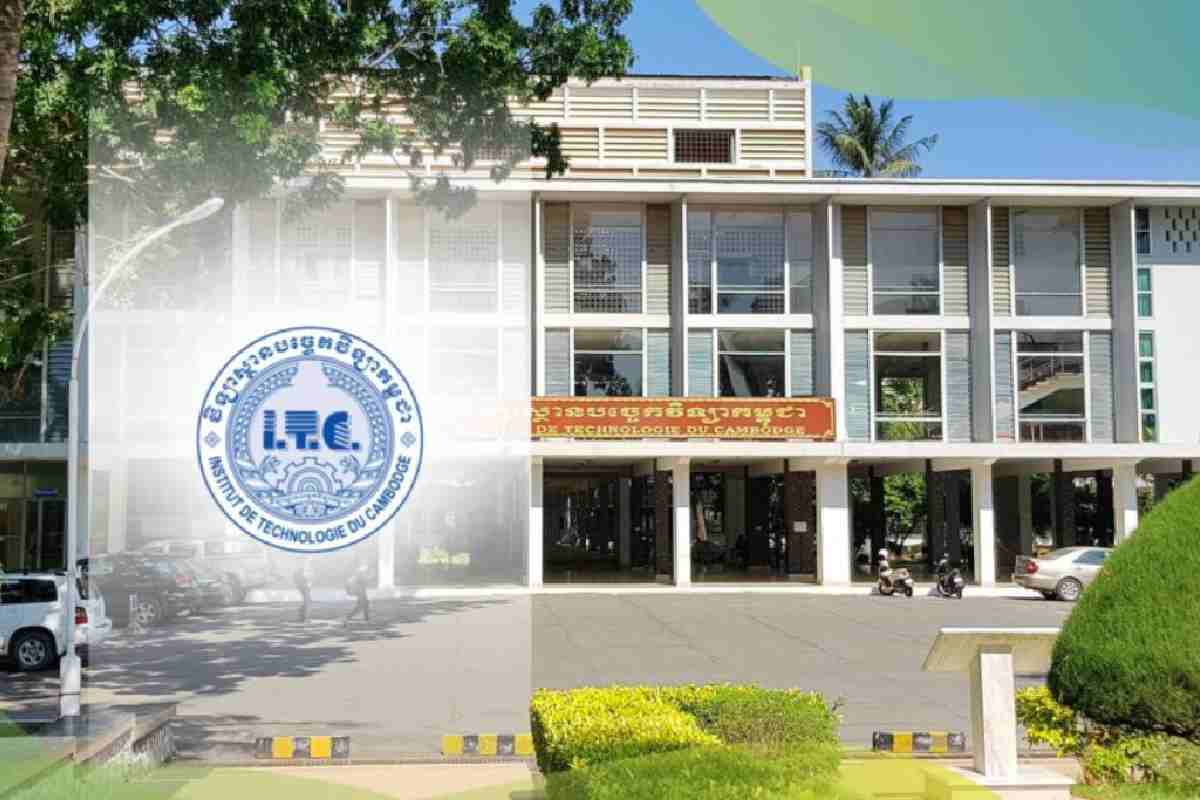
Institute of Technology Of Cambodia was the first donor to establish contacts in Cambodia in the early 1990s, as the country moved towards peace. Since then, we have supported their rebuilding efforts after the brutal Khmer Rouge regime and decades of regional conflict.
According to the International Development Research Centre, international partnerships helped Cambodia rebuild its education and technology sectors after years of conflict.
Table of Contents
Connect The Nation
Post-war Cambodia faced many challenges, including isolation. In 1998, an IDRC grant helped establish Cambodia’s first Internet service provider. According to the World Bank, internet access has significantly improved Cambodia’s digital communication and economic development. Since then, we have funded Institute of Technology Of Cambodia research to develop programs. And web content in Khmer, the national language. It allows Institute of Technology Of Cambodia to use computers, access the Internet and generate content.
The projects’ local research teams included the Institute of Technology, the Ministry of Education, Youth and Sports, and the National Information and Communications Technology Development Authority.
Institute of Technology of Cambodia Programs
| Program Area | Purpose | Impact |
| Internet Infrastructure | Connect Cambodia to global internet | Digital communication growth |
| Khmer Web Content | Develop online content in Khmer language | Digital literacy improvement |
| Computer Education | Teach students computer skills | Workforce skill development |
| ICT Training | Technology training programs | Modern job opportunities |
Community Managed Resources
The unsustainable exploitation of primary resources, particularly forests and coastal areas, is also a severe threat. We have long supported a community-based approach that actively engages local people in research to help improve the sustainable use of resources.
For example, researchers and communities in Ratanakiri province mapped traditional territories and resource demand. Tested more efficient farming techniques, and gained knowledge to manage the Yak Loam Lake eco-tourism area. The research helped people improve their livelihoods, set limits on resource use, and secure land ownership.
In Koh Kong province, government officials and researchers collaborated to help community members establish rules for coastal resources and create a federation of communes to reduce conflict between communities. They planted mangroves, worked to stop illegal fishing, and adopted small-scale aquaculture to improve their income.
As a result of these and other successes, the Cambodian government incorporated community participation into its legislation. A national nongovernmental organization called The Learning Institute, created with funding from IDRC further promotes community involvement in sustainable natural resource management through research and training.
Community Resource Management Comparison
| Province | Resource Type | Community Action | Result |
| Ratanakiri | Forest & land | Territory mapping & farming improvements | Sustainable land use |
| Yak Loam Lake | Eco-tourism | Community tourism management | Increased local income |
| Koh Kong | Coastal areas | Mangrove planting & fishing rules | Environmental protection |
Technology and Internet Growth in Cambodia
| Year | Internet Users | Growth Percentage |
| 2000 | 0.2 million | — |
| 2010 | 1.2 million | 500% |
| 2015 | 4.5 million | 275% |
| 2020 | 9.7 million | 115% |
| 2024 | 11.5 million | 18% |
Main Challenges
Cambodia’s National Policy on Lifelong Learning contains two main challenges that require participatory collaboration across the sector to address:
High Drop-Out Rates And Poor Quality Of Education
While the net enrollment rate in Cambodia’s primary schools has stood at around 97% over the past ten years, only approximately 80% of those enrolled managed to finish sixth grade. Grade; 40% completed junior high school, and only 20% completed senior high school. Furthermore, the national assessment results showed that almost half of the students tested in grades 3, 6 and 8 failed to achieve the expected knowledge articulated in the curriculum.
Cambodia Education Statistic
| Education Level | Enrollment Rate | Completion Rate | Major Issue |
| Primary School | 97% | 80% | Students drop out before Grade 6 |
| Lower Secondary | 60% | 40% | Limited resources |
| Upper Secondary | 35% | 20% | Economic pressure |
| University Level | 10–15% | Low | Limited access in rural areas |
Education Completion Rate
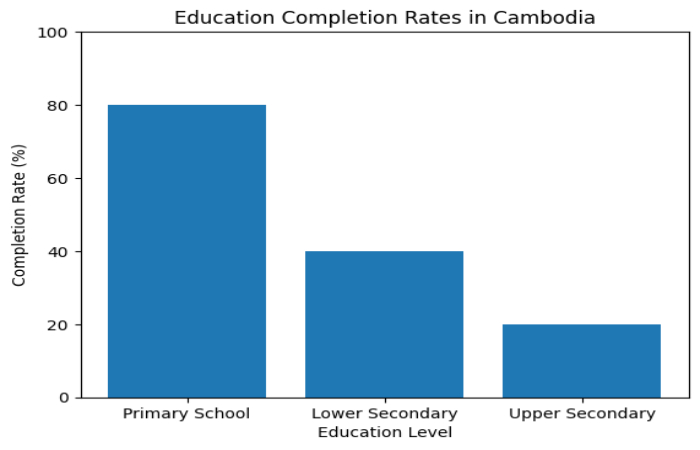
| Education Level | Completion Rate |
| Primary School | 80% |
| Lower Secondary | 40% |
| Upper Secondary | 20% |
Limited Productivity
This affects all types of businesses and institutions and is linked to a low level of education among the female workforce (school completion rates for women and girls range from 27.8% in primary education to 14% in lower secondary education, 6.8% for upper secondary education and 5.4% for tertiary education). In addition, a 2008 study by the Federation of Cambodian Employers and Business Associations showed that workers in technical professions show a lack of soft skills (i.e. communication, decision-making, and problem-solving skills).
Workforce Skills Gap Comparison
| Skill Category | Demand in Industry | Current Workforce Skill Level |
| Technical Skills | High | Medium |
| Communication Skills | High | Low |
| Problem Solving | High | Medium |
| Digital Skills | Very High | Low |
| Management Skills | Medium | Low |
Main Objectives And Measures
The National Lifelong Learning Policy aims to improve learning opportunities and skills development for all people with the following measures:
- The story of a legislative framework and mechanisms to ensure that Lifelong Learning is widely and comprehensively implemented;
- Opportunities for Lifelong Learning in formal, non-formal and informal settings, covering a wide range of learning content and purposes, particularly for vulnerable and disadvantaged groups;
- The development of a comprehensive and flexible Lifelong Learning program that promotes literacy and skills development;
- The establishment of Lifelong Learning centers with adequate learning materials, equipment and technological resources;
- Provide training for coordinators of Lifelong Learning programs that contains information on program design. Materials development, teaching methods, orientation, and development of technical and professional skills;
- Improve the recognition, validation and accreditation of knowledge, skills and competencies acquired through Lifelong Learning programs following the Technology Of Cambodia National Qualifications Framework (CNQF), ensuring transparency and consistency;
- The promotion of a culture of global citizenship; for example, encourages families, communities and the particularly vulnerable. And marginalized groups to participate in Lifelong Learning and eliminate discrimination in all its forms;
| Lifelong Learning Program | Expected Benefit |
| Literacy Programs | Reduce illiteracy |
| Technical Training | Increase employability |
| Digital Education | Improve technology skills |
| Community Training | Strengthen local economies |
| Professional Skills | Increase productivity |
Specific Characteristics Of The Policy
Cambodia’s National Policy on Lifelong Learning includes a measure to foster collaboration with the private sector. Partners and NGOs to provide Lifelong Learning opportunities. Incentives will be offered to businesses, companies, factories, small businesses and the agricultural industry. Among others, to support and participate in lifelong learning. Both companies and institutions will be encouraged to offer workers and employees Lifelong Learning opportunities to improve their knowledge, skills and aptitudes. The policy further suggests networking with local service providers to develop lifelong learning programs.
Conclusion
and also make it possible for the nation to stably move up to the upper-middle income group by 2050. In the backdrop of the twenty-first century’s globalization and the advancements in social, economic, political, environmental, cultural, industrial, and technical fields.