
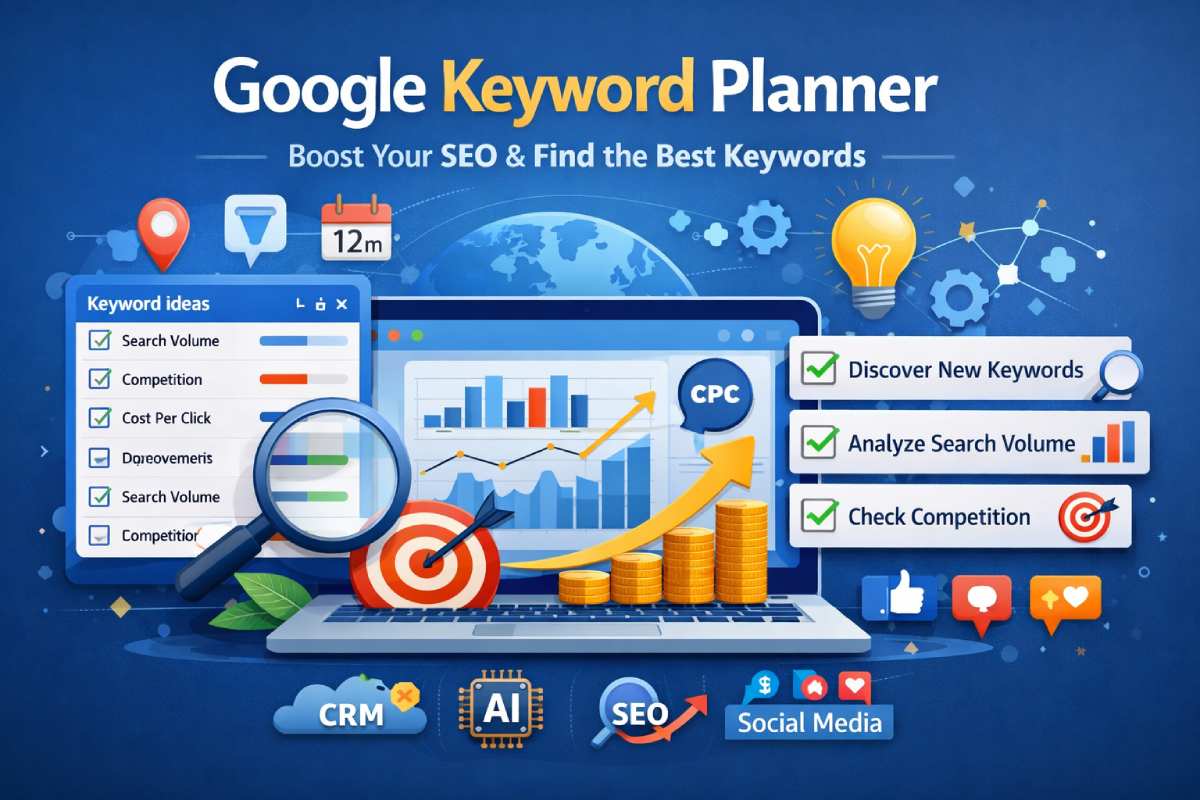
Google Keyword Planner is free, which allows you to discover keyword ideas that work with your content and know the data associated with them, such as B. the number of searches and the respective positioning costs. Marketing Plan
By researching key topics and planning website content, you can position your website and achieve top search topics.
In this article, you propose to find a detailed explanation about this Google Keyword Planner, now you explain your advantages, and now you can share with us.
Table of Contents
What is Google Keyword Planner?
Keyword Planner is Google’s keyword planner used to find keywords related to a company or business, which are then used to generate content and rank in search engines.
With this keyword planner, it is possible to get information about the search volume, suggestions for related terms, trends, and the intensity of competition, among other things.
Unlike its predecessor keyword tool, this tool is bundled with Google Ads and is much more convenient to work with an account’s default settings. When spending on a Google Ads campaign, the scheduler provides detailed information.
What is Google Keyword Planner for?

Keyword Planner is one of the tools most commonly used by marketers who create content strategies to attract and engage potential customers. Discover what its main uses are below.
Discover New Keywords
With Keyword Planner, you can find data for the keywords you have in mind and find other high-trending keywords to use to expand your content planning.
Understanding Search Intent
Finding keywords is not enough. You must understand why people are searching.
There are mainly 3 types of search intent:
| Type | Example | Purpose |
| Informational | what is keyword planner | Learn something |
| Navigational | google ads login | Find a website |
| Transactional | buy seo tools | Take action |
If your content matches the correct intent, it will rank faster. Research from Ahrefs shows that matching search intent is one of the most important ranking factors in modern SEO.
Always create content based on what the user actually wants.
See Average Monthly Search Numbers
The Google Planner also lets you know how many monthly searches a specific keyword has estimated per month and how often particular keywords are searched in your niche.
These numbers will help you choose the best keywords to position your content. It doesn’t make sense to use words that no one is searching for or words with very high search rankings, as they mean stiff competition on the web.
Keyword Planner helps you understand the words or phrases users often use when searching for products or services: It’s essential to understand how users search for information about products and topics that interest them.
The broader a keyword, the more frequently it is searched monthly; The more specific it is, the less requested. Depending on your goals, niche keywords can be more profitable for you.
Determine Costs for Campaigns
In addition to providing information about alternative keywords, Keyword Planner offers the average cost of showing ads with your selected keywords in search results.
Create New Campaigns Marketing Plan
Keyword Planner is designed to be used with Google Adwords; Therefore, you can easily create campaigns based on your keyword research.
When creating a campaign, you can select a recommended budget based on your skills and needs or enter a daily budget. When setting up campaigns, you can follow the scheduler by accessing Tools and Settings. Marketing Plan
Although Keyword Planner was designed to be used with Google Ads, it’s still a valuable keyword research tool whether you’re implementing a paid advertising campaign or not.
Why is it Important to Conduct Keyword Research?
Keyword research is the central action of any SEO strategy. According to Semrush, keyword research helps businesses understand audience demand and improve search rankings. This study helps to understand the demand for individual keywords, how competitive they are, and the best options for ranking in search engines or running paid campaigns.
Well-done keyword research can provide an account of the different avenues people use to find the information they are looking for. Plus, it can help you develop new content ideas and learn more about your audience.
With keyword research, you can customize your strategies, increase traffic, and improve conversions on your website.
Latest Keyword Research Trends (2026)
Keyword research is changing fast. Today, people are not just typing simple words — they are using longer and more natural search phrases.
Some important trends you should know:
- People now search using questions like “how to use keyword planner effectively”
- Voice search is increasing, especially on mobile devices
- Long-tail keywords (3–5 words) are getting better results
- Search intent matters more than just keyword volume
For example:
| Old Search Style | New Search Style |
| keyword planner | how to use google keyword planner step by step |
| seo tools | best free seo tools for beginners |
| marketing | digital marketing strategies for small business |
This means your content should match how real people search today.
Learn to Use Google Keyword Planner in your Marketing Plan
Now that you know what the keyword planner tool is for, we will share with you step by step how to start analyzing keywords related to your business or business.
With Google Keyword Planner, you can develop better content strategies to drive qualified leads to your website.
Access to Google Keyword Organizer
To use Google Keyword Planner, you must consume a Google Ads account. You can set it up in minutes if you don’t have it, and you don’t need to start a movement to use the scheduler.
After creating your account, you need to log into Google Ads and navigate to the wrench copy in the toolbar at the top of the page.
Filter and Sort Keyword Results Marketing Plan
Once you have the keywords, it’s time to filter to create a smaller, more specific list that’s right for your business.
See the “Keyword Results Page” for a breakdown of the search. At the top, you will find four options: Locations, Language, Search Networks, and Date Range.
- Country or country where the keyword is used.
- This is the language in which the keywords you search for information are located.
- Research networks. These are partner sites that use other search engines and Google properties such as Google. B. YouTube included.
- Date range. The default value of 12 months is generally an excellent variable to analyze your keywords.
Based on these categories, you can apply filters to get a decent number of keywords. The filters you can add are:
- keyword text. Here you can filter and set the tool to only show keywords that contain a specific word or phrase.
- Exclude keywords from my account. Exclude keywords that you are already bidding on in Google Ads.
- Average monthly searches. It is used to filter out keywords with search volume and those with less demand. Marketing Plan
- Allows the planner to show keywords with the competition that you choose from low, medium, and high. It is essential to clarify that the “Competition” score relates only to the competition in the ads and not to the competitiveness of their search engine rankings.
- Offer at the top of the page. This shows the average cost of delivering your ad at the top of the page for that keyword.
- Organic impression share. It shows how often your website seems in the organic results for the keyword. Your Google Search Console account must be connect to Google Ads to use this feature.
- Organic middle position. It shows where each keyword ranks organically on Google.
Another useful results page tool to consider is call Expand Your Search. This function displays keywords related in some way to the terms entered at the beginning.
How to Choose the Best Keywords
Choosing the right keyword is not about picking the highest number.
From experience, the best keywords are:
- Medium search volume
- Low to medium competition
- Clear user intent
Simple Tip:
| Keyword Type | Should You Use? |
| High competition | Avoid (hard to rank) |
| Low search volume | Limited traffic |
| Medium competition | Best choice |
Balance is the key.
Analyze Terms in “Keyword Ideas”
You’ve already filtered the results for the ideal keywords for your business. Now you can analyze the remaining terms to find interesting keywords.
- Go to the Keyword Ideas section, and you can see ads according to the following filters:
- Keywords (by relevance). This is the tilt of keywords that Google deems most relevant to the keyword or URL you entered.
- Average monthly searches. Here is a range for search volume, and it’s not a very accurate indicator.
Offer for the top. Here you can measure the monetization potential of keywords and find out whether there are any meaningful keywords.
Select the keyword Marketing Plan
Now that you’ve explored all of Keyword Planner’s features, tools, and options, it’s time to find the right keywords to build and optimize your website content. While it might be simple at this stage, many factors go into choosing the right keywords.
Imagine you have an online stock that sells organic and healthy products. If you want to write an article about the health aids of organic coffee, it would be pointless to use the word “coffee” as a keyword as it is too broad; or the phrase “health benefits of coffee” as too narrow.
Common Keyword Research Mistakes to Avoid
Many beginners make these mistakes:
- Choosing only high-volume keywords
- Ignoring user intent
- Not using long-tail keywords
- Copying competitors blindly
- Not updating old content
From real experience, even one of these mistakes can stop your content from ranking.
Avoiding mistakes is as important as doing the right things.
Conclusion
You already know how to use the tools that Google Keyword Planner offers you. Now you can start to thoroughly analyze the keywords related to your company or business and plan a fantastic content strategy that will help you attract visitors and convert them into customers.
Tech solutions like CRM, AI, SEO, and social media management enhance marketing performance, personalize outreach, and generate insights, thereby enhancing customer engagement and ensuring a competitive digital marketing strategy.