
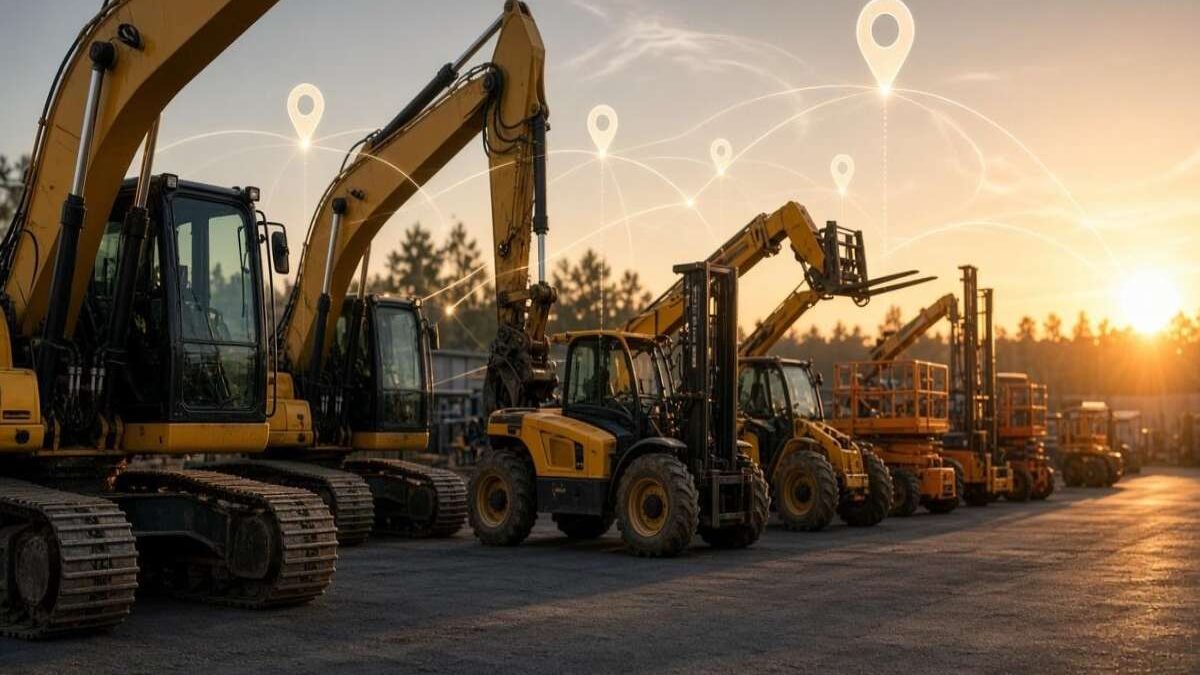
Walk into a typical equipment rental yard ten years ago and you would have found a whiteboard, a filing cabinet full of carbon-copy contracts, and a counter clerk who knew, more or less, where every scissor lift was. That model worked when a business had a few dozen machines. It breaks down fast when the fleet grows to hundreds of assets spread across job sites, branches, and repair bays.
Today the rental industry is quietly going through the same digital shift that hit retail and logistics. GPS trackers, engine telematics, mobile apps, and cloud dashboards are turning heavy, dumb iron into connected devices that report their own location, hours, and health. Here is a look at the gadgets and software behind that change, and what they mean for rental companies and their customers.
Table of Contents
Every machine is becoming a connected device
The biggest change is that rental equipment now talks. Modern excavators, telehandlers, generators, and even compact tools ship with telematics units, and older machines can be retrofitted with small, battery-powered trackers that cost less than a single day’s rental.
These devices are a textbook example of the Internet of Things: physical objects fitted with sensors and connectivity so they can send data without a person typing it in. For a rental business, that data usually includes:
- Location: live GPS position, plus geofence alerts when a machine leaves an approved job site.
- Engine hours: the real basis for maintenance intervals and, increasingly, for usage-based billing.
- Fault codes: early warnings about hydraulic pressure, overheating, or low battery voltage.
- Idle time: useful for showing customers how much they are paying for a machine that sits still.
On their own, these signals are just noise. What matters is where they end up.
The cloud is the new rental counter
Most of this telemetry flows straight into the cloud. Instead of a server in a back office, rental companies now run their operations on hosted platforms that anyone on the team can reach from a laptop, tablet, or phone. If you want a refresher on why that architecture took over so many industries, this overview of cloud computing covers the basics well.
In the rental world, the cloud solves a very specific problem: one version of the truth. When the yard manager, the delivery driver, the accounting team, and the customer all look at the same live record, you stop double-booking machines and stop arguing over when something was actually returned.
That is why so many operators have moved from spreadsheets to dedicated cloud-based equipment rental software that pulls together reservations, inventory, contracts, invoicing, and maintenance in one system. The telematics feed becomes far more valuable once it is attached to the right contract and the right customer.
Mobile apps in the field
Rental work doesn’t happen behind a desk. Drivers deliver equipment to muddy job sites, technicians repair it in the field, and customers often need something extra at 6 a.m. Smartphones have become the main tool for all of them.
A good field app now handles:
- Digital check-out and check-in. Drivers snap timestamped photos of the machine on delivery and pickup, which ends most damage disputes before they start.
- E-signatures. Contracts and delivery tickets get signed on a phone screen instead of a soggy paper form.
- Barcode and QR scanning. Small tools and attachments, which are easy to lose, can be scanned in and out in seconds.
- Work orders. Technicians get maintenance jobs pushed to their phone, log parts and labor, and close the ticket on the spot.
For customers, self-service portals let them see what they have on rent, request an off-rent pickup, or extend a contract without calling the branch. That saves time on both sides of the counter.
Predictive maintenance: fixing machines before they fail
Unplanned downtime is expensive in rental. A broken machine earns nothing, and a breakdown on a customer’s site damages the relationship as well. Connected tech is pushing the industry from “fix it when it breaks” to “fix it before it breaks.”
The logic is simple. Once you are collecting engine hours and fault codes, software can schedule service automatically at the right interval, flag machines whose readings drift outside normal ranges, and keep units with open safety issues from being rented out. Some operators are layering basic machine learning on top, spotting patterns such as a generator model that tends to fail after a certain number of hours under heavy load.
The result is higher utilization, fewer emergency swaps, and a fleet that lasts longer, which matters a lot when a single machine can cost six figures.
Smarter pricing and utilization
Utilization, meaning the share of time an asset is earning money, is the number every rental owner watches. Connected tech makes it measurable instead of a guess.
With live data, managers can:
- See which categories are always booked and which are gathering dust.
- Move idle equipment between branches before buying new units.
- Experiment with dynamic pricing, charging more during peak construction season and offering deals when demand drops.
- Offer usage-based rates for customers who only run a machine a few hours a day.
These are the same data-driven tactics that ride-sharing and hotel apps made familiar. Rental is just catching up.
Security and theft prevention
Equipment theft costs the industry a lot every year, and compact machines like skid steers and mini excavators are especially easy to load onto a trailer and drive away. Connected trackers help in a few ways: geofence alerts after hours, remote immobilization on some telematics systems, and GPS data that helps police recover stolen units quickly.
Even simple Bluetooth tags, the same kind people use for keys and luggage, are now used to keep track of small, high-value tools that would otherwise slowly disappear from the shelves.
What to watch out for
Connected rental tech is powerful, but it isn’t plug-and-play. A few common pitfalls:
- Data silos. A telematics portal that doesn’t sync with your booking and billing system just adds another screen to check. Integration matters more than features.
- Connectivity gaps. Remote job sites may have patchy cellular coverage, so look for devices and apps that work offline and sync later.
- Staff adoption. The best app fails if drivers find it slow or confusing. Pilot new tools with the people who will use them every day.
- Security hygiene. Every connected device is a potential entry point. Use strong authentication, keep firmware updated, and pick vendors that take security seriously.
The bottom line
The equipment rental business is turning into a tech business. Sensors on the machines, apps in the field, and cloud platforms in the office are replacing the clipboard and the whiteboard with real-time data. Rental companies that adopt these tools well get higher utilization, fewer disputes, and happier customers. Those that don’t will find it harder to compete with rivals who know exactly where every machine is and what condition it’s in.
For tech watchers, rental is a good reminder that some of the most interesting IoT deployments aren’t in smart homes or gadgets on your wrist. They are bolted onto a yellow machine sitting on a construction site.